
VR sightseeing binoculars · 2023
A different
point of view.
An AI mood board. A fabrication brain.
And a very real measuring tape.
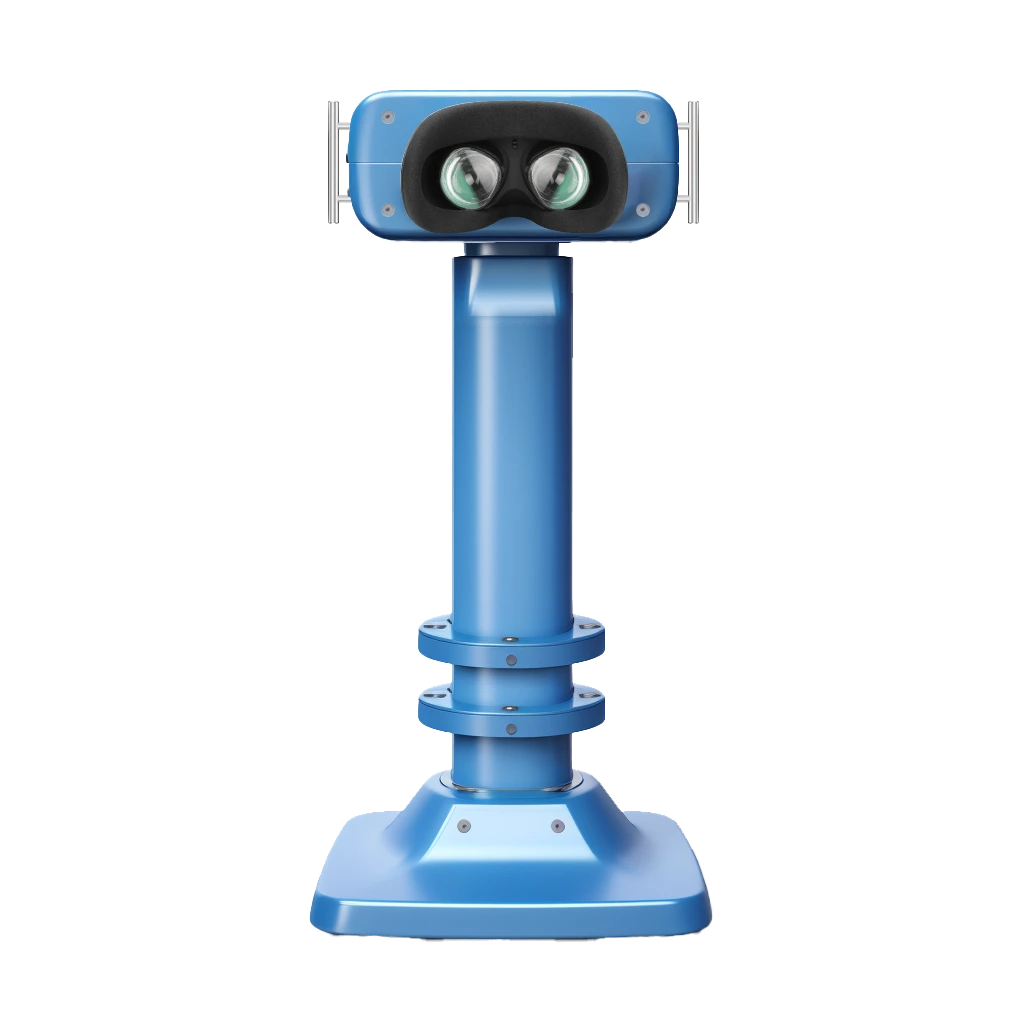
I’d been around
this pedestal before.
A production company approached me to develop VR sightseeing binoculars for a proposed film-festival activation. I’d made this kind of thing before. That was why they called.
It was also why my first recommendation was to start from scratch. The familiar cast-iron sightseeing viewer wasn’t a workable retrofit for this project. I knew the fabrication problem well enough to steer us away from it.
A purpose-built design could accommodate the headset and give the experience its own identity: something more futuristic, with a shape and finish suited to the proposed activation.
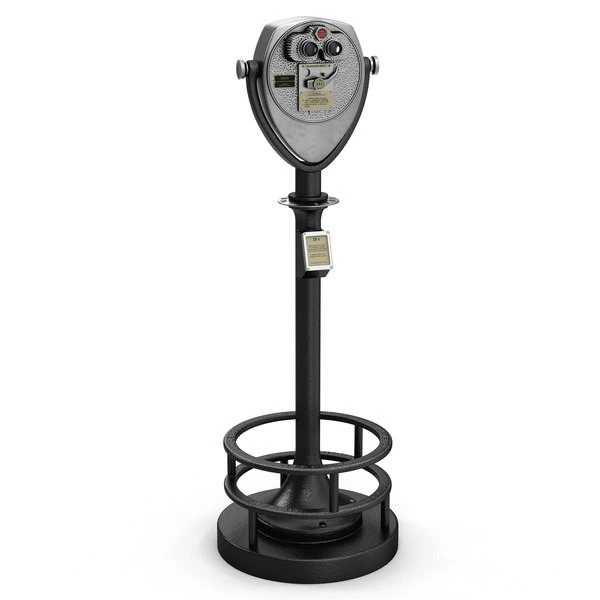
Traditional sightseeing-viewer reference.
Change the prompt.
Change the silhouette.
At first, the images kept coming back to the same familiar forms. “Sightseeing binoculars” brought a lot of visual baggage.
So I got specific. I described the head and the body separately. I varied the support: pedestal, tripod, different proportions. Across hundreds of options, those decisions opened up a much wider range of shapes.
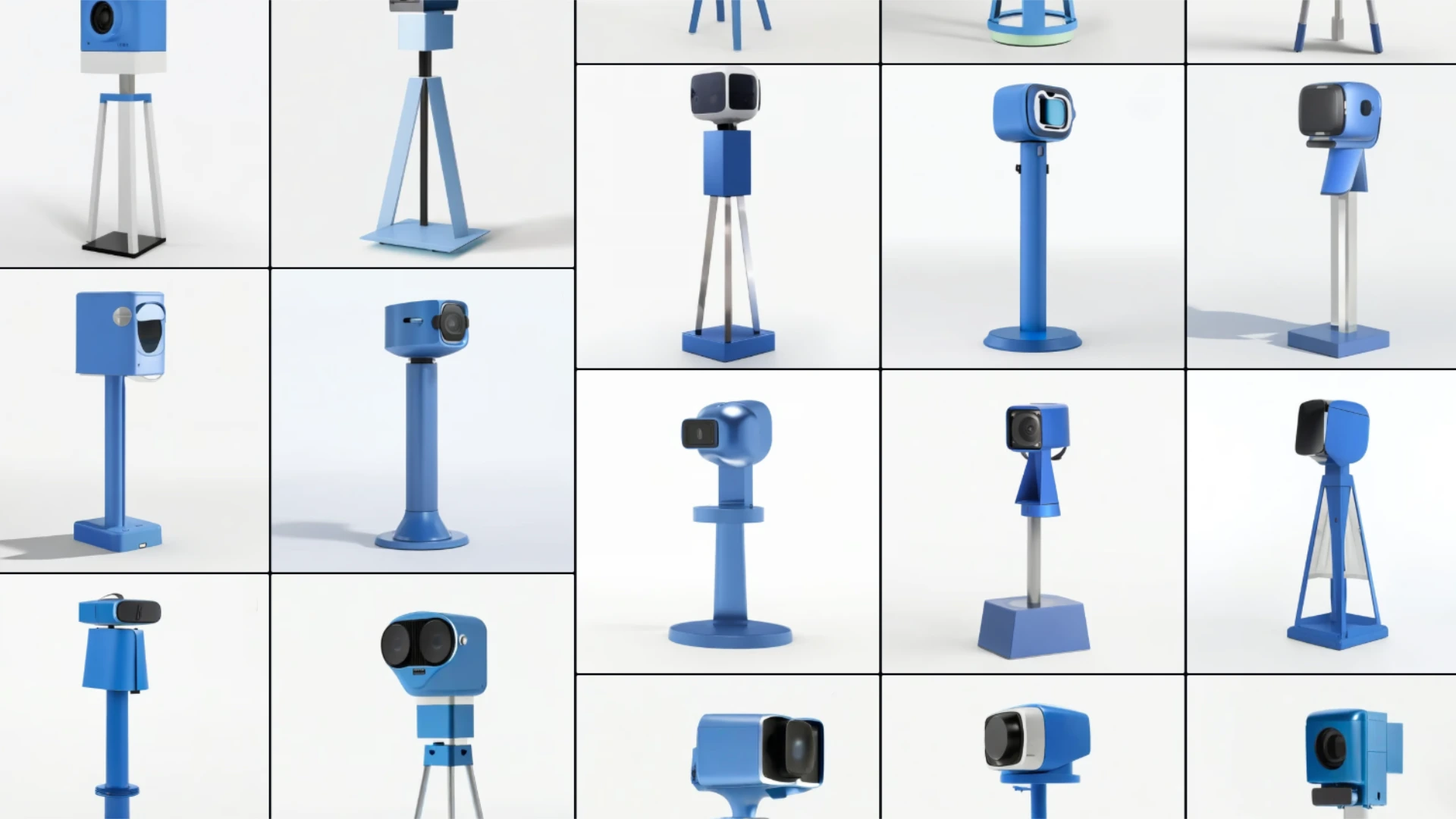 Explore the sheet
I was looking for a form I could see a way to fabricate. The image generator gave me options. Experience helped me choose one worth developing.
Then it was
hands on.
The selected image was close to what I had in mind. I brought it into Photoshop and rebuilt it into an appropriate design, cross-referencing measurements as I worked.
The head needed to receive a real face and headset. The pedestal needed different proportions. Handles, step-up rings and the relationship between the parts all became deliberate choices.
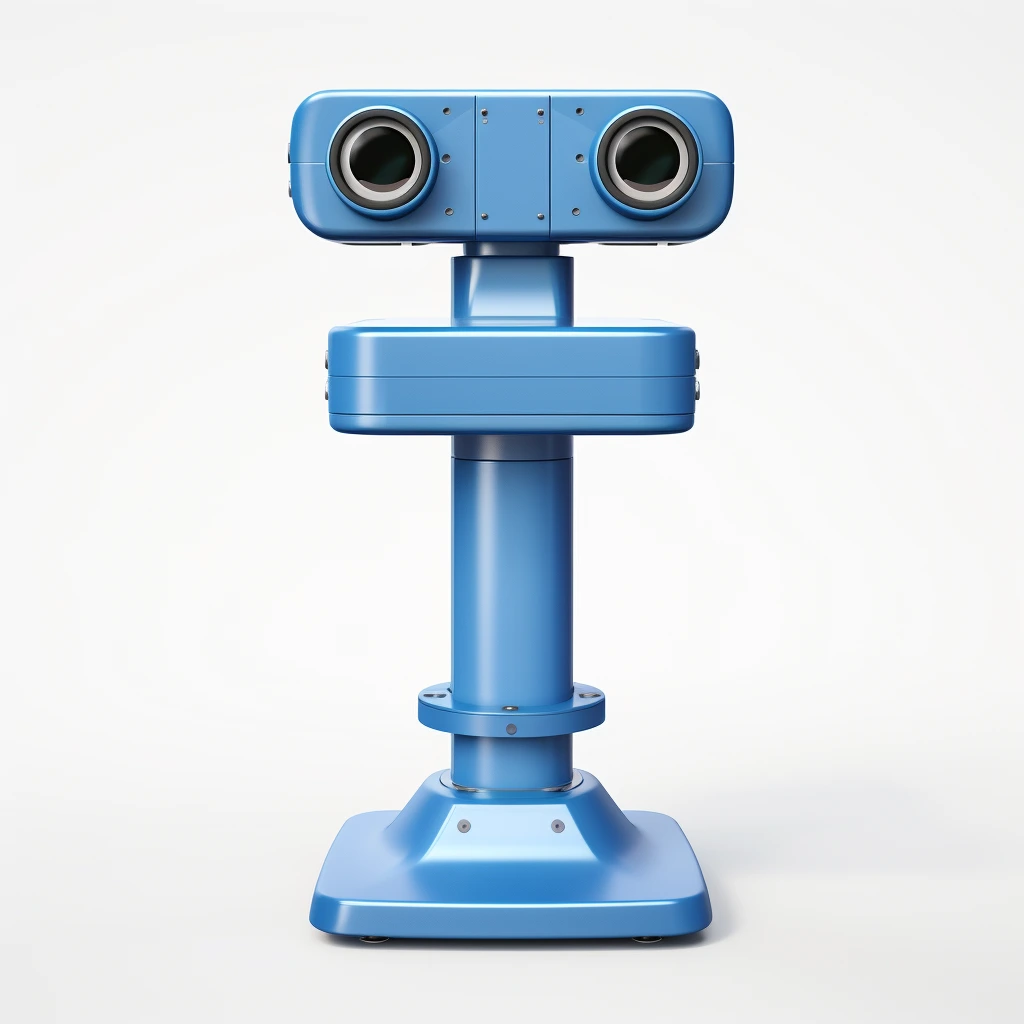 View image ↗
A useful shape to work from.
View design ↗A viewer developed around its intended use.
AI got the exploration moving. From here, it was Photoshop, Illustrator, a ruler and a measuring tape.
A picture has
to make room
for the hardware.
I took the design into Illustrator, drew the vector outline and built a profile view. I measured the head unit and cross-referenced it against an Oculus Quest 2.
The drawing brought the practical questions into the same frame: headset fit, access to the back, power, rotation, handles and a weighted base.
This is a concept drawing. Its original “Proportions are not to scale” note is retained. The proposed construction was never fabricated or validated.
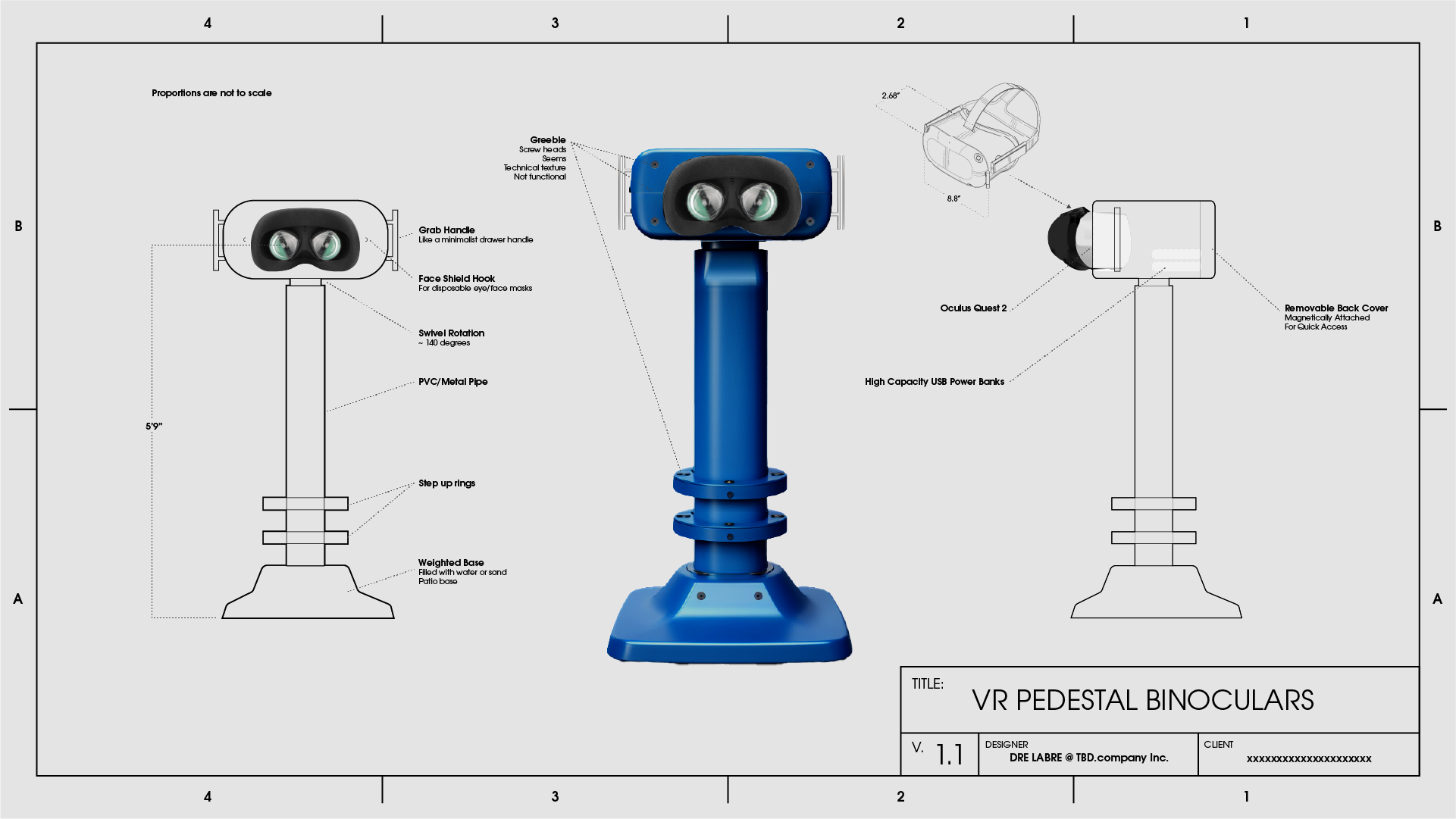 Inspect drawing ↗
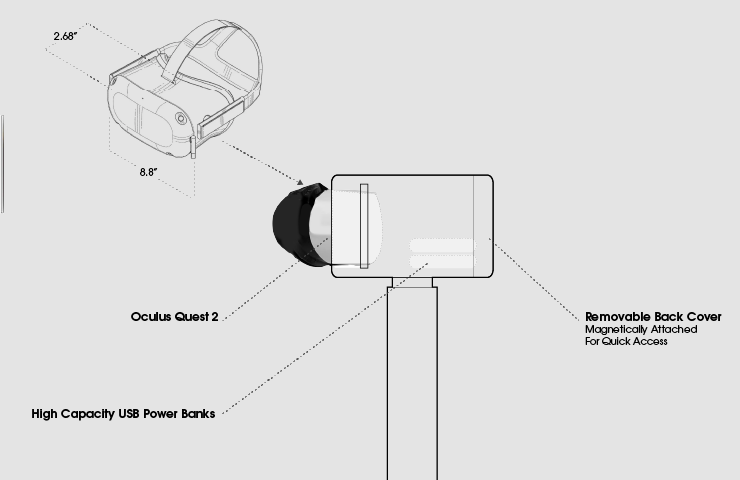 Inspect detail ↗
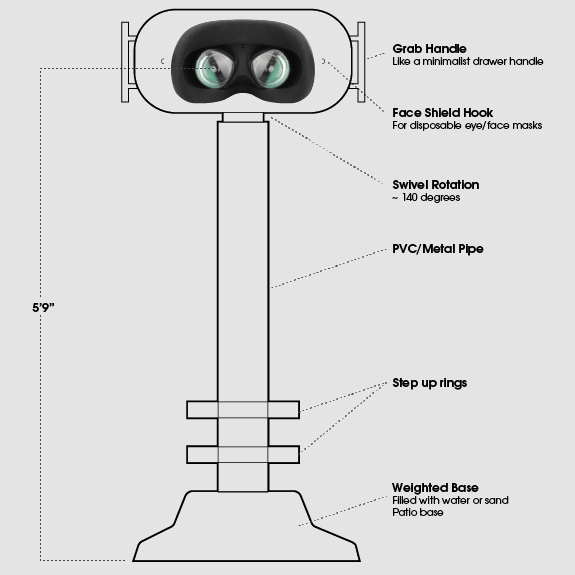 Inspect detail ↗
Read the drawing notes
These are proposed features recorded on the concept board, not tested specifications.
- Headset: Oculus Quest 2, with reference dimensions of 2.68″ and 8.8″ marked on the headset illustration.
- Access and power: a magnetically attached removable back cover for quick access, with high-capacity USB power banks inside the head.
- Handling: grab handles, a hook for disposable eye/face masks and approximately 140 degrees of swivel rotation.
- Support: PVC or metal pipe, step-up rings and a weighted patio-style base filled with water or sand. The front view carries a 5′9″ height reference.
- Surface details: screw heads, seams and technical texture are identified as nonfunctional decorative details.
The project
stayed on paper.
The process
holds up.
The project was never awarded. These binoculars were never built.
What remains is a useful record of how I work: open up the possibilities, choose with fabrication in mind, then get specific enough to put the idea on a drawing.
AI served as a mood board and a concept instigator. The design developed through hands-on editing, measurement and decisions grounded in having made things before.
You still have to know what you’re looking at.
- Design & development
- Dré Labre
- Tools
- Image generation, Photoshop, Illustrator
- Project
- 2023 · Client withheld · Unbuilt proposal